About
MonetizeMe was a research project funded by the Engineering and Physical Sciences Research Council (EPSRC). Exploring how people use the health and fitness data they collect using wearable devices and apps.
Project Overview
Monetize Me examines life-logging or the tracking of one’s own personal data offers a range of benefits to the individual and to business organizations. A better understanding one’s health, fitness, wellbeing, working patterns, financial and other resources can be empowering and can offer opportunities for self-improvement. It is now even possible for individuals to make money out of their ‘digital information’.
There are also huge opportunities for app developers, data warehouses and other (often small) companies to offer services based on the sharing and analysis of life-logging data. Monetization can become the goal of the app developer and the life-logging user.
However, a number of questions remain about how the mutual benefits of life-logging data can be realized. The first concerns privacy because of the sharing and analysis of high volumes of deeply sensitive personal data on a real time basis. A second question arises concerning how businesses may financially exploit the benefits of life-logging data in a manner that does not compromise the privacy of participants. Accordingly, this project has three objectives:
- to understand the different types of life-logging users which exist in the mass market and distill their privacy requirements
- to develop privacy friendly business models for those offering life-logging services
- to develop a privacy management infrastructure for users of those services

Kirstie Ball
Kirstie Ball is Professor of Management at the University of St Andrews. Her research focuses on surveillance, security and privacy, particularly as these issues affect organizations. Her current empirical work focuses on the impact of national security on the private sector, particularly on front line workers; the public understanding of security, surveillance and privacy; surveillance and democracy; and privacy and the quantified self. Her theoretical interest concerns subjectivity and surveillance.
Kirstie has held grants from many of the major European social science funders, including the European Union Framework Programme, EPSRC, ESRC and The Leverhulme Trust. Her published work almost exclusively appears in journals such as New Technology, Work and Employment, Labour History, Tourism Management, Work, Employment and Society and Organization. She has recently published the monograph ‘The Private Security State? Surveillance, Consumer Data and the War on Terror’ with Copenhagen Business School Press. She has also edited ‘The Routledge Handbook of Surveillance Studies’, with Kevin Haggerty and David Lyon, and ‘The Surveillance-Industrial Complex’ with Laureen Snider. Kirstie was a founding editor of Surveillance and Society and a founding director of Surveillance Studies Network.
Arosha K. Bandara
Senior Lecturer in Computing (MCT) where he is member of the Software Engineering and Design research group. His research focuses on the challenges of engineering adaptive systems by combining rigorous formal techniques with concrete implementations to solve practical problems. He is Co-I on a number of security and privacy projects funded by EPSRC (PRiMMA and Privacy Dynamics), ERC (ASAP) as well as the Qatar National Research Fund (Adaptive Information Security in the Cloud).


Tally Hatzakis
Tally’s research focus on socio-technical change, change management and trust. She is currently conducting research on Quantified Self privacy and business modelling. Tally holds an MBA from Aston Business School and gained her PhD in Information Systems Management from Brunel Business School in 2005. She has significant research experience gained from a career working within both public and private organisations. Her research covers a broad spectrum of socio-technical themes and has published in Business and Management, Human Resources and Information Systems publications.
Luke Hutton
Luke is a research associate on the Monetize Me project at The Open University. He holds a BSc in Applied Computing from the University of Dundee, and a PhD in Computer Science from the University of St Andrews. His background is in studying privacy issues in social network sites, location-based services, and ubiquitous computing environments, and the ethical implications of studying such contexts, particularly the acquisition of meaningful consent to use potentially sensitive personal data. His current research interests include the privacy impacts of quantified self technologies, and the challenge of developing transparent, ethical, and fair algorithms which make inferences and decisions based on the data we generate.

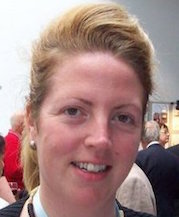
Hannah Marston
Hannah’s research focus is primarily associated to older adults and digital games. More recently, she has expanded her interests to include gender; adults aged 70+ years and where the use of technology can be utilized in preparation for the future ageing populations. Hannah gained her PhD from the School of Computing at Teesside University in 2010 and has since worked at the David R. Cheriton School of Computer Science at the University of Waterloo, Canada and at the Institute of Movement and Sport Gerontology at the German Sport University Cologne, Germany. Hannah is a member of the Gerontological Society of America and the British Society of Gerontology. In conjunction with colleagues from Swansea University and the University of Northern British Columbia, Hannah is guest editing a special edition of the Games and Culture journal – Digital Gaming & Ageing.
Ciaran McCormick
Ciaran McCormick is a Research Engineer at The Open University’s Faculty of Mathematics, Computing and Technology. His main interests are in developing software that enable life-logging enthusiasts to easily collate and control their data from various 3rd party services and providing insights using Machine Learning (ML) techniques and data visualisation tools. Ciaran is an avid life-logger and collects data on his health, fitness and productivity. He is always looking for new and interesting pieces of data to collect. Ciaran has previously worked in Fin Tech in the City of London for various investment banks. He obtained his MSci in Mathematics and Computer Science from Queens’ University Belfast. His personal website can be found at ciaranmccormick.com

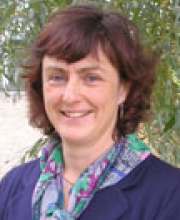
Maureen Meadows
Senior Lecturer in Management, and Head of the Department for Strategy and Marketing at the Open University Business School. Formerly Chair of the Special Interest Group in Strategy at the British Academy of Management (BAM), Maureen is a member of BAM Council. With a background in mathematics, statistics and operational research, Maureen has over 20 years of experience of working with ‘big data’ and customer analytics, both as a practitioner in the financial services sector and an academic. She has published on the progress and problems experienced by organisations working on strategic projects such as market segmentation, relationship marketing and customer relationship management; and her research also explores the use of strategy tools such as scenario planning and visioning by senior managers. She was a co-investigator on the recently completed Leverhulme Project Grant ‘Taking Liberties?’ concerning public private blurring in the surveillance society.
Bashar Nuseibeh
Bashar Nuseibeh is Professor of Computing and head of the software engineering and design group at The Open University. He is also a Professor of Software Engineering at the University of Limerick, where he served as Chief Scientist of Lero – The Irish Software Research Centre. He is a visiting professor at University College London (UCL) and National Institute of Informatics (NII), Japan, and is holder of a Royal Society-Wolfson Merit Award and a 5-year ERC Advanced Grant on ‘Adaptive Security and Privacy’. He has been Principal Investigator on a number of privacy and security related projects funded by research councils in the UK, Ireland, and Qatar. He served as Editor-in-Chief of IEEE Transactions on Software Engineering and the Automated Software Engineering Journal, and has received numerous research awards including a Philip Leverhulme Prize, ICSE Most Influential Paper Award, Royal Academy of Engineering Senior Research Fellowship, a Microsoft Research Award, and many ‘best paper’ awards.


Blaine Price
Principal Investigator on this project. He is a Senior Lecturer in Computing in the Open University’s Faculty of Science, Technology, Engineering and Mathematics. He interned at Apple in Cupertino and completed his postgraduate work at the University of Toronto before joining The Open University in 1994. His work in privacy and ubiquitous computing lead naturally to his interest in lifelogging and the quantified self movement. One of his quantified self studies was featured on a BBC Horizon TV programme entitled Monitor Me and he gave a TEDx talk in 2014 entitled ‘Am I Normal? Why Self-Quantifying is for Everyone’. His work on this project is centred on building and evaluating privacy preserving lifelogging infrastructures that are able to support a variety of business models including sharing, selling and data donation.
Keith Spiller
Keith Spiller’s research focuses on the social consequences of surveillance and monitoring, the impacts of security regimes on organisations and individuals, as well as understandings of data control and security. Keith’s current interests explore lifelogging and questions issues of privacy and how data is exploited by users as well as businesses seeking to profit. Previously he worked on the FP7 funded Increasing Resilience In Surveillance Society project which investigated the social and economic impacts of surveillance technologies in contemporary Europe and on the Leverhulme funded Talking Liberties: New Uses in UK Consumer Data project examining the impacts of compliance with governmental security regulations in the travel and financial service sectors. He has a PhD in Human Geography from Durham University.